
Every great climb starts with a simple question: What is this hold asking you to do? A well-designed climbing hold is more than a shape bolted to plywood. It has grip, texture, direction, depth, and personality. When you understand the anatomy of a well-designed climbing hold, you can start choosing shapes that make every route feel more intentional.
That matters whether you are building a garage wall, refreshing a training setup, or buying holds for a commercial gym. The right hold can invite a beginner to keep moving or make an experienced climber stop, reset, and unlock a whole new sequence.
What Makes a Hold Feel Intentional?
A hold feels intentional when the shape gives clear feedback. You can tell where your hand wants to land, how much pressure the grip needs, and what kind of body position the move is asking for. That does not mean every hold should feel easy. It means the hold should make sense for the route.
A good hold design starts with purpose. A jug should feel positive enough for warmups or steep-wall recovery. A sloper should ask for friction and body position. A crimp should reward careful finger placement without feeling random.
Setters notice this immediately. A thoughtful hold gives them options without turning the route into a guessing game. They can rotate it, pair it with footholds, or move it to a new angle and still build movement that feels connected.
What Makes a Grip Shape Useful?
Grip shape is the first thing most climbers notice. It controls how your hand engages the hold and what kind of movement follows. A deep jug lets you pull with confidence. A rounded sloper asks you to stay patient and trust your position.
A pinch grip climbing hold brings a different kind of challenge because it makes your thumb work with your fingers. That squeeze creates tension through the hand and forearm. It also gives setters room to build compression moves or controlled body-position problems.
Grip shape affects confidence, too. Beginners often need positive shapes that let them focus on footwork instead of panic-gripping. Stronger climbers usually want shapes that demand precision and smarter sequencing.
A strong hold mix usually includes:
- Jugs for warmups, steep terrain, beginner routes, and recovery moves
- Crimps for finger strength, technical movement, controlled pulling, and precision
- Slopers for friction, open-hand strength, balance, and body tension
- Pinches for thumb engagement, compression, grip variety, and creative setting
- Pockets for accuracy, careful loading, finger control, and route variety
What Makes a Texture Work?
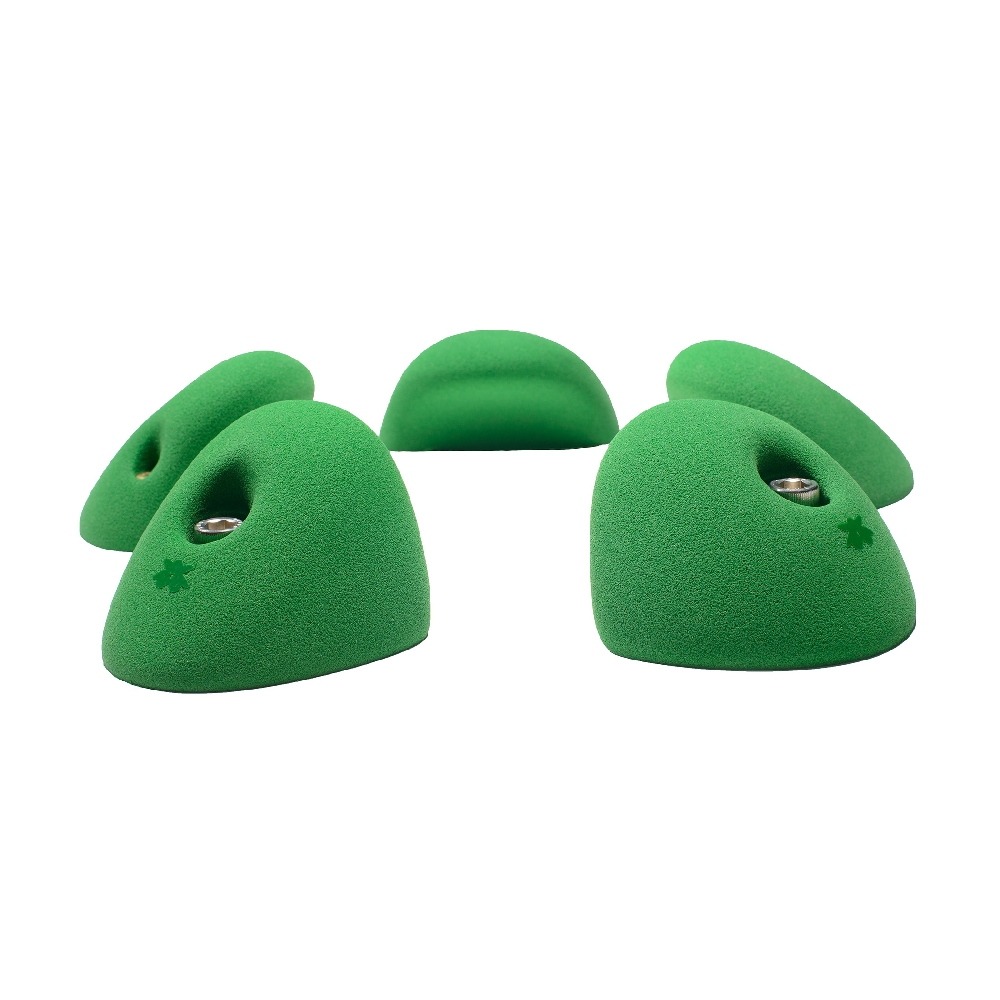
Texture gives a hold its bite. Too little texture, and the hold can feel slick before the move even starts. Too much texture, and long sessions can wear down skin fast. The best texture lands in that sweet spot where climbers can trust the hold and still want another burn.
Texture also changes how climbers move. On a smooth sloper, body position becomes the whole game. On a grippier edge, the climber may feel secure enough to focus on foot pressure or the next hand move.
For home walls, texture can shape how often people want to train. A clean sandstone feel keeps the wall inviting without making every session feel punishing. Commercial gyms also need texture that can handle brushing, resetting, and steady traffic.
What Makes a Hold Size Smart?
Size affects difficulty and route style. Large holds are not just for easy climbs. On steep terrain, they can create powerful movement that still feels possible. On vertical walls, they can become rests or confidence-building anchors.
Small holds bring precision into the session. They make climbers think harder about finger position and foot pressure. When used well, they sharpen technique without making the climb feel unfair.
The key is balance. A wall packed only with tiny holds can become discouraging. A wall covered only in oversized jugs may lose its challenge too quickly. Better setting comes from mixing sizes so each route has rhythm.
What Makes a Hold Directional?
A hold has a direction before it ever touches the wall. Some holds want to be pulled straight down. Others work better as side pulls or underclings. Direction shapes the climber’s body position before the next move even starts.
This is where route setting gets fun. Rotate one hold slightly, and the whole move can change. A comfortable edge can become more technical. A friendly pinch can suddenly demand more shoulder tension.
On home walls, directional holds help a small space feel bigger. You can create movement across the wall instead of only climbing straight up. Even a compact panel can feel fresh when the holds support different pulls and body positions.
What Makes a Hold Durable?
A great shape only works if it holds up. Climbing holds take repeated pulling, brushing, resetting, and traffic. Durable construction helps the hold keep its shape and texture through all of that use.
Durable polyurethane holds are built for real climbing setups. They work for garage walls, dorm builds, kids’ walls, and commercial gyms. Embedded Grade 8 washers add strength where the bolt connects to the hold.
A lifetime warranty adds another layer of confidence. It lets climbers, setters, and wall builders treat their holds like long-term tools instead of temporary gear. That fits the way climbing walls actually get used.
What Makes a Hold Color Helpful?
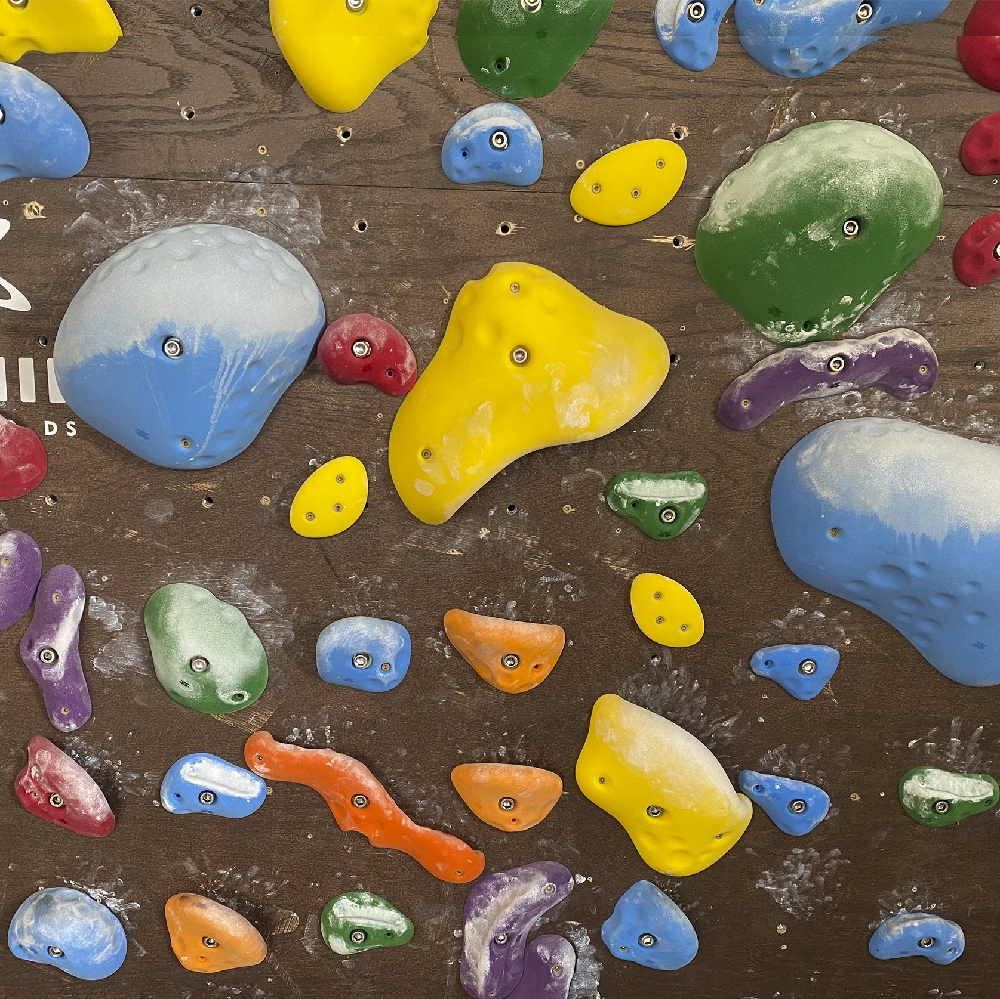
Color is not just decoration. It helps organize routes, guide climbers, and make the wall easier to read. For beginners and kids, color-coded climbs can make the experience feel more approachable right away.
Color also matters for the room itself. Homeowners, custom home builders, and interior designers often want a climbing wall that fits the space. Custom color options help the wall look planned instead of patched together. The wall can look clean, bold, playful, or dialed in for training.
What Makes Better Holds Shape Better Routes?
When you understand the anatomy of a well-designed climbing hold, you start choosing holds with a setter’s eye. The shape affects how your hand lands. The texture changes how much you trust the grip. The direction tells your body where to go next.
Put those pieces together well, and your wall becomes more than a place to pull. It becomes a space for movement, creativity, and progression.
Ready to build routes that feel better from the first move? Explore Atomik Climbing Holds for durable polyurethane shapes, custom colors, three texture options, and fast shipping in 1–5 business days. Build your perfect wall with holds that give every move a reason.


Leave your comment