
Home climbing walls are becoming more popular as climbers look for ways to stay active, train consistently, and bring a bit of adventure indoors. But before you break out the plywood and start drilling holes for holds, you’ll need to consider if your home is suitable for a rock climbing wall.
The short answer is that many homes can be adapted to fit a climbing wall with the right planning. Let’s take a look at what kind of space makes for a great starting point.
What Makes a Good Climbing Wall Space?
Before diving into construction plans, you’ll need to determine whether your home has a suitable space for a climbing structure. A good climbing wall spot is generally open, has a solid structure, and isn’t interrupted by windows, vents, or built-in fixtures. Even if you don’t have a dedicated room, creative options such as hallways, basements, or unused corners can work with the right setup.
Think in terms of access and usability. Will climbers be able to move around freely? Is there room for basic safety padding or mats? Can the area be cleared of furniture or obstacles? If the space feels flexible and can support a vertical surface, it may be a stronger candidate than you think.
Load-Bearing and Structural Safety
One of the most important aspects of building a climbing wall is ensuring the structure behind it can handle the added load. A climbing wall has to support your full body weight, dynamic movement, and the hardware that keeps everything in place. That means the surface the structure is mounted to and the framing behind it need to be solid and secure.
For most homeowners, this starts with understanding whether the wall is load-bearing or partition. While a non-load-bearing wall can still work, it may need reinforcement. Many home climbing walls are built on custom-framed plywood panels anchored into studs or joists, which evenly distribute the weight. A contractor or structural expert can offer peace of mind without overcomplicating the project if you’re unsure.
Ceilings, Angles, and Height
Another limitation people assume they’ll face is ceiling height, but this factor is often more flexible than you’d think. While commercial climbing gyms reach for the rafters, most home setups don’t need extreme height. For a simple vertical wall, an 8-foot ceiling can work. The key is designing with intention. Shorter walls can still offer excellent training with the right layout and holds.
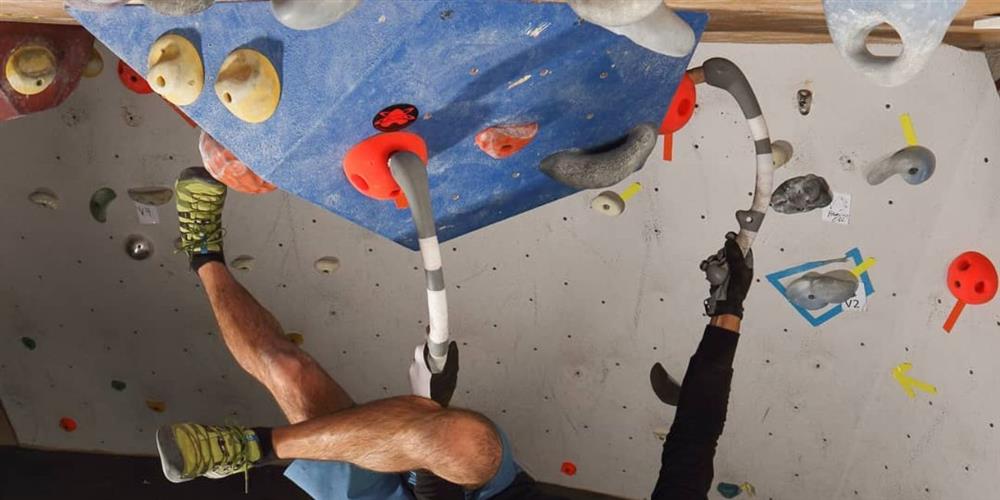
To make the most of lower ceilings, many climbers incorporate angled or overhanging panels. These add challenge and variety without requiring extra height. Adjustable training boards, campus walls, or low-profile bouldering setups are also great alternatives when space is limited.
Wall Size and Clearance
While height is a common concern, the wall’s width and surrounding clearance are just as important. A climbing wall should provide sufficient lateral space for movement and a safe buffer zone in case of falls. A general minimum is about 6 feet wide, though wider setups, around 8 to 12 feet, offer more variety and usability.
You’ll also want to account for what’s around the wall. Make sure nearby furniture, doors, or sharp edges won’t interfere with climbing or safety padding. More compact homes can accommodate smaller climbing walls with traversing routes or adjustable panels. What matters most is designing the space with a clear path for movement.
Lighting and Visibility
Lighting might seem like an afterthought, but it plays a crucial role in making your climbing wall safe and usable. Dim or uneven lighting can lead to misjudged holds or missed footholds, which increases the risk of slips and falls.
In garages or basements, overhead LED fixtures or track lighting provide strong, directional illumination without obstructing the area. Avoid relying on floor lamps, standing lights, or wall sconces near the wall, as these can become dangerous obstructions.
If you already have decorative fixtures on or near the climbing surface, remove or relocate them to reduce the chance of injury.
Wall Surface and Framing Options
Choosing the right wall surface and framing is crucial for both safety and durability. While it might be tempting to mount climbing holds directly onto existing drywall, this approach can lead to serious problems.
Drywall alone lacks the strength to support the dynamic loads of climbing, which can cause it to crack, crumble, or fail under stress. This not only risks damage to your home but also jeopardizes climber safety.
The best practice is to build a solid backing using plywood panels that are at least ¾-inch thick secured to a sturdy frame of studs or joists. This setup adds a few inches of depth to the wall, so in tighter rooms you’ll need to consider how that may affect the layout or foot traffic.
For homes without suitable existing framing, constructing a freestanding wall is another reliable option.
Flooring and Fall Zones
No matter how experienced the climber, a safe fall zone is non-negotiable. Proper padding is crucial for absorbing impact and preventing injuries. For vertical walls and bouldering setups, crash pads or gym-style flooring create a safe landing area without requiring major modifications to the room.
Spacing is equally important. Ideally, your fall zone should extend several feet beyond the base of the wall in all directions. This allows for unpredictable foot slips or dynamic moves. If you’re working in a smaller room, you may need to get creative with padding placement or limit the height and angle of your wall to maintain safety without giving up the fun.
Outdoor Walls
If you have outdoor space available, such as a backyard, garage exterior, or covered patio, you might wonder if an outdoor climbing wall is a better fit for your home. Outdoor walls offer the advantage of more space without indoor constraints, but they also come with their own considerations.
Weather exposure is the biggest factor, since rain, sun, temperature changes, and humidity can all affect the climbing wall materials. Climbing holds and wall surfaces must be weather-resistant, and regular maintenance will be necessary to prevent wear and damage. Additionally, anchoring the wall securely into outdoor framing or concrete is essential to handle wind and environmental stresses.
Designs for outdoor walls often use materials such as treated plywood, composite panels, or metal framing combined with specialized coatings. While building outside expands your options, it requires careful planning to protect your investment and ensure safety throughout the year.
Is My Home Suitable for a Rock Climbing Wall?
Determining if your home is suitable for a rock climbing wall often depends less on the size of your space and more on how creative and committed you’re willing to be. With the right materials and a solid plan, you can turn almost any space into a climbing-ready zone.
Here at Atomik Climbing Holds, we simplify the process by offering a wide range of indoor rock climbing holds made from polyurethane resin that’s inert, safe, and incredibly durable. All of our products are manufactured in the U.S. using American-sourced materials, so when you build your wall, you're supporting both safety and craftsmanship.



Leave your comment